
VTNE Requirements: Who Qualifies and How to Apply (2026)
VTNE eligibility runs through 3 AAVSB pathways. See who qualifies, the $375 application fee, and how to apply through the MyAAVSB portal.

VTNE eligibility runs through 3 AAVSB pathways. See who qualifies, the $375 application fee, and how to apply through the MyAAVSB portal.
AAVSB does not publish a national VTNE pass rate. See the exam’s real difficulty factors: 10 domains, a 425 cut score, and a 5-attempt retake cap.
The VTNE covers 10 domains across 170 questions (150 scored) in 3 hours. See the weight of each domain, the passing score, and a sample question.
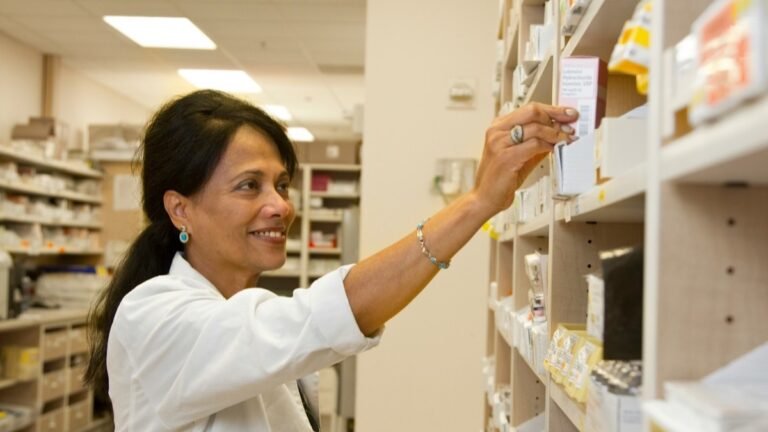
PTCE eligibility as of 2026: two pathways (training program or 500 hours experience), application steps, fees, and the 90 day authorization window.
PTCE pass rate is 69% for 2025 per PTCB. See the hard numbers behind PTCE difficulty: time per question, passing score, and domain weights.
PTCE domain breakdown as of 2026: Medications 35%, Patient Safety 23.75%, Order Entry 22.5%, Federal Requirements 18.75%, effective January 2026.

Who qualifies for the NREMT EMT exam: state-approved course completion, the $104 fee, the 90-day ATT window, and how licensure differs.
NHA CPT eligibility: high school diploma plus a training program or work experience route, both requiring 30 documented venipunctures. How to apply.
NHA allows 3 CPT attempts with a 30 day wait between each, then a 12 month wait after a third fail. See the score report, retake schedule, and next steps.
NHA doesn’t publish a flat CPT exam fee. See what’s verified instead: the $195 two year renewal cost, the $391.50 reinstatement total, and retake fees.
The NHA CPT exam covers 5 domains across 100 scored items in 2 hours. See each domain’s weight and what it tests, verified against NHA’s test plan.
Verified CCMA eligibility: high school diploma gate, training program or work experience routes, California’s 2-year exception, provisional certification.

Verified CBCS eligibility: high school diploma gate, 5 training program routes, work experience (1/3 or 2/5 years), and the provisional certification rule.
CBCS covers 4 domains weighted 33/32/20/15%. See the verified breakdown, the September 2024 closed book change, and a sample billing question.

How to register for the NCLEX-RN: NRB eligibility, the $200 Pearson fee, the 365-day window, and ATT name-match rules. Updated for 2026.
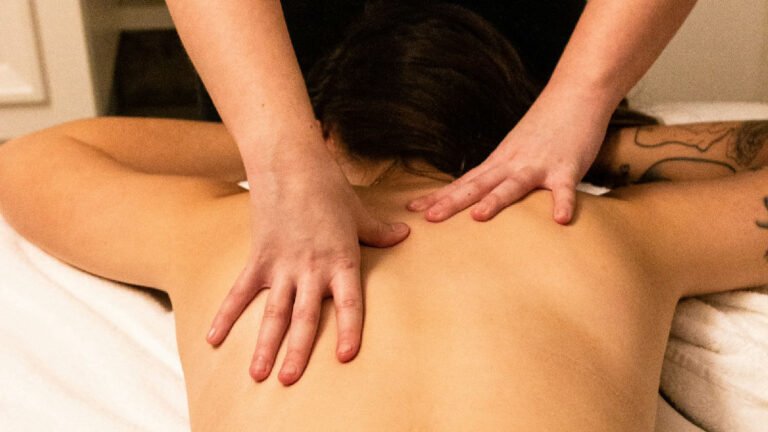
MBLEx eligibility: how FSMTB verifies massage education, the $265 fee, the 6-month application window, and how state licensure works.

Elsevier publishes no official HESI A2 subtest list or item count. See the commonly assigned subtests, what each covers, and what your program decides.

CNA requirements start with a federal 75-hour training floor. See how states add hours, the two-part exam, and the registry rules.
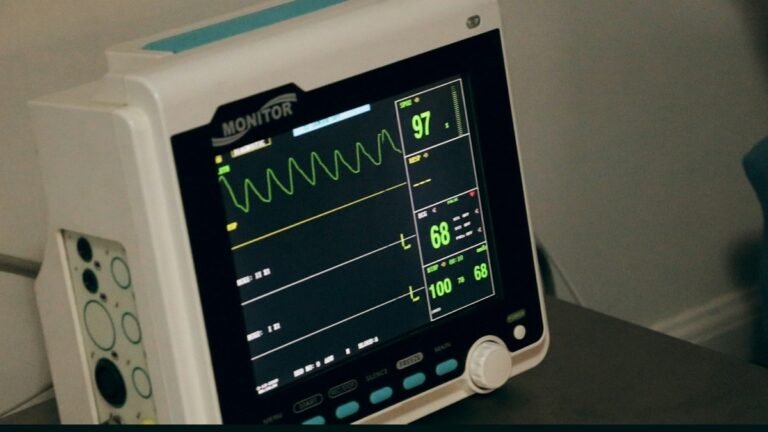
CCRN eligibility explained: the Direct Care, Knowledge Professional, and Tele-critical Care pathways, practice hour minimums, and how to apply.
AACN does not publish a CCRN pass rate. See what the exam’s structure, domain weights, cut score, and eligibility bar tell you about its difficulty.
RBT certification requires age 18+, a high school diploma, background checks, 40-hour training, and a competency assessment. Full application steps inside.
The RBT exam’s 2025 first-time pass rate was 75% versus 38% for retakes, per BACB data. See the full pass rate history and what it means.
The RBT exam covers 85 questions across 6 content areas. See exact question counts per domain, from Behavior Acquisition (25%) to Ethics (15%).

BCBA eligibility: 4 pathways, 2,000 fieldwork hours (or 1,500 concentrated), $245 application fee, 2-year exam window. Changes January 2027.
BACB’s 2025 data: 51% first-time BCBA pass rate (9,955 candidates) vs 23% retake (13,196 candidates). See the 5-year trend and what drives difficulty.
The BCBA exam covers 9 content domains from the BACB’s 6th Edition Test Content Outline: 175 scored questions, weighted 5% to 14% per domain.
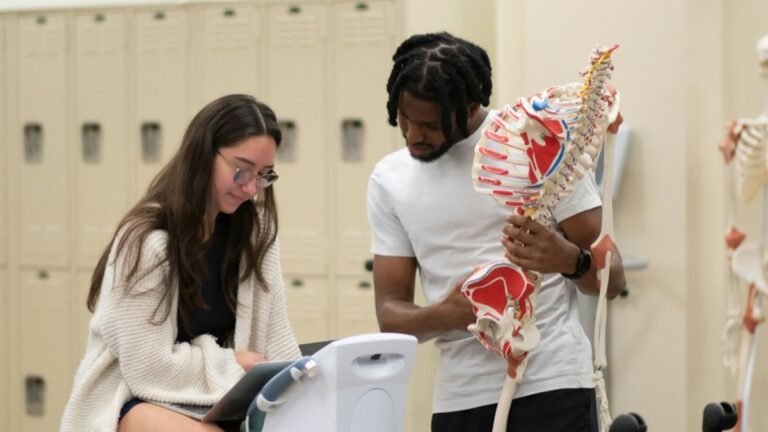
ATI publishes no TEAS pass rate. See the 170 item, 209 minute structure, section pacing, and ATI’s own 70 to 75 percent competitive score guidance.
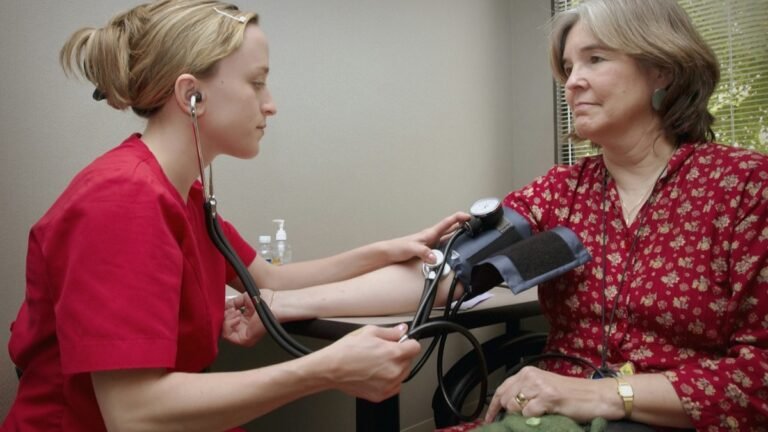
AAMA reports a 69% first-time pass rate (Jul 2024 to Apr 2025). Passing score 405/800. What drives CMA (AAMA) exam difficulty and how to prepare.
CMA (AAMA) has 5 eligibility categories: accredited grad, nonrecent grad, recertificant, Alternative Pathway, educator. Fees, 90-day window, retake rules.
VTNE test day at a PSI center: arrive 30 minutes early with valid photo ID for a 170 question, 3 hour exam. See what to bring and what to leave behind.
AAVSB allows up to 5 VTNE attempts with a 30 day wait between tries. See the retake process, fees, score reporting, and what to do next.
The VTNE application fee is $375 as of September 2026. See what it covers, reschedule and retake costs, and why state fees are separate.
PTCB test day rules as of 2026: ID and prohibited items, online proctored setup, reschedule cutoffs, no show forfeiture, and score report timing.
PTCB retake rules as of 2026: no wait for attempts 2 to 3, a 6 month wait before attempt 4, and what happens after four tries.
PTCE exam fee is $129 as of 2026. See what it covers, retake costs, reschedule and withdrawal rules, and CPhT recertification fees.
NREMT’s own 2025 data shows an 80% EMT exam pass rate. See how the computer adaptive format shapes difficulty and what actually predicts passing.
The NREMT EMT exam has 5 domains weighted 15% to 43%. See NREMT’s published breakdown, question count, and format for the Spring 2025 exam.
What to bring to the NREMT EMT exam: ATT valid 90 days, ID must match, arrive 30 min early. No-show forfeits the $104 fee. Full test day rules.
Failed the NREMT EMT exam? Here is the 15 day wait, six attempt limit, remedial education rule, and what to do before retesting.
The NREMT EMT exam costs $104 per attempt as of 2026. See what the fee covers, retake costs, and how state licensure fees differ.
NHA reports an 81.38% CCMA pass rate for 2024. See the passing score, scaled scoring model, and what actually makes the exam feel difficult.
NHA CPT test day at a PSI center or live remote proctoring: bring valid photo ID for a 120 item, 2 hour exam. See what to bring and what to leave behind.
The CCMA exam covers 7 domains across 150 scored items in 3 hours. See every domain’s weight, item count, and what each one actually tests.
CCMA test day at a PSI center or by live remote proctoring: bring valid photo ID for a 180 item, 3 hour exam. See what to bring and what to leave behind.
NHA allows 3 CCMA attempts with 30 day waits, then a 12 month wait. Here’s the exact retake timeline, score report details, and what to do next.
NHA doesn’t publish a flat CCMA exam fee. See where it’s shown, what retakes cost, and the $195 two year recertification fee, verified against nhanow.com.
CBCS test day at a PSI center or by live remote proctoring: bring valid photo ID, no code manuals, for a 125 item, 3 hour closed book exam.
NHA allows 3 CBCS attempts with a 30-day wait between each, then a 1-year wait after a third fail. See the score report, retake schedule, and next steps.
NHA doesn’t publish one fixed CBCS exam fee. See verified costs: $195 renewal every 2 years, $391.50 reinstatement, and what the fee covers.
NCSBN’s own 2025 data: the NCLEX-RN pass rate was 86.7% for first-time U.S.-educated candidates. See what that number means and how CAT difficulty works.
Client Needs categories, weight ranges, and the CAT format under NCSBN’s NCLEX-RN test plan effective April 2026, broken down domain by domain.
NCLEX-RN test day: acceptable ID rules, 30 minute arrival window, Pearson VUE check in, prohibited items, break structure, and when results arrive.
Failed the NCLEX-RN? Learn the 45 day wait, 8 attempt yearly limit, retake fee, and how to read your Candidate Performance Report.
NCLEX-RN registration costs $200 in 2026, rising to $350 in 2027. See what the fee covers, state licensure costs, and retake pricing.
FSMTB reports a 70.4% first time MBLEx pass rate (FY 2025). See what actually drives difficulty and how to prepare across all 7 domains.
The MBLEx has 100 questions across 7 content domains in 110 minutes. See the official FSMTB weights, format, and a sample question.
What to bring to the MBLEx: two forms of ID, arrival time, prohibited items, and the 110 minute exam format straight from FSMTB’s Candidate Handbook.
Failing the MBLEx gets you a diagnostic report by content area and no FSMTB waiting period to retake. See the $265 reapplication process, step by step.
The MBLEx costs $265 per attempt, retakes included. See FSMTB’s fee policy, the $40 result transfer fee, and how state licensure fees add up.
Elsevier documents 2 HESI A2 delivery paths as of Sept 2026: own device/testing center or ProctorU remote. ID, calculator, and score rules are program-set.
The CNA exam has a written test and a hands on skills evaluation. See the typical NNAAP structure, content areas, and how states vary.
No invented pass rates. Here is what actually makes the CNA written exam and skills evaluation hard, and how to prepare for both.
What to bring to the CNA exam: ID rules, NNAAP skills evaluation specifics, the oral exam option, and why you must confirm your state’s exact rules.
What’s on the CCRN Adult exam: 150 items, 125 scored, 3 hours, and the domain weights tested under the current AACN test plan.
CCRN test day rules for both PSI Testing Centers and Live Remote Proctoring: ID rules, prohibited items, tech checks, the testing window, and fees.
Failed the CCRN exam? AACN allows up to 4 retests in a rolling 12-month period at a discounted fee. Here is what your score report shows next.
CCRN exam fees as of 2026: $260/$375 initial, $185/$290 retest, plus renewal costs and whether AACN membership pays for itself.
What to bring to the RBT exam: accepted ID, arrival window, check-in steps, prohibited items, and result timing at Pearson VUE, per the BACB Handbook.
The BACB RBT exam costs $110 total as of 2026: a $65 application fee plus a $45 Pearson VUE exam fee. See retake, recertification, and rescheduling fees.
The BACB allows up to 8 RBT exam retakes within a 12-month window, with a 7-day wait between attempts. See the full retake process and what to do next.
What to bring to the BCBA exam: accepted ID, arrival window, check-in steps, prohibited items, and result timing at Pearson VUE, per the BACB Handbook.
BACB allows 8 BCBA exam attempts in a 2 year window, 30 days apart, $265 each. 2025 retake pass rate was 23% vs 51% first time. See what to do next.
BCBA exam costs $370 minimum: a $245 BACB application fee plus a $125 Pearson VUE fee. See retake, recertification, and CEU costs, verified at bacb.com.
ATI sets no universal TEAS passing score. See how the Adjusted Individual Total Score and five Academic Preparedness Levels actually work.
TEAS Version 7 has 170 items (150 scored) across Reading, Math, Science, and English in 209 minutes. Here is the section by section breakdown.
ATI documents 4 TEAS delivery modes as of Sept 2026. See ID rules, calculator and scratch paper policy, prohibited items, and remote tech requirements.
The CMA (AAMA) exam has 200 questions across 3 categories: Clinical Competency (59%), General (21%), Administrative (20%). Full breakdown.
CMA (AAMA) and CCMA (NHA) compared: eligibility paths, exam structure, fees, and recertification. Neutral, certifier-verified breakdown.
CMA (AAMA) test day, verified against AAMA policy: PSI test center or Live Remote Proctoring, ID rules, the 15 minute late rule, and what to bring.
Failed the CMA (AAMA) exam? You get up to 6 attempts in 12 months, no required wait, and a score report showing exactly what to study next.
CMA (AAMA) exam fees as of 2026: $125 members / $250 nonmembers, retake and recertification costs, verified directly from AAMA’s application policy.