What Is on the NREMT Paramedic Exam? Six Domains and Weights
The National Registry of Emergency Medical Technicians (NREMT) Paramedic Certification Examination is a Computerized Adaptive Test (CAT) of 110 to 150 questions with a 3.5 hour time limit, delivered at Pearson VUE testing centers. Of the questions you see, 20 are unscored pilot items that are not identified. The exam covers six content domains, and the largest is Clinical Judgment at 34% to 38%, followed by Medical/Obstetrics/Gynecology at 24% to 28%, Cardiology and Resuscitation at 10% to 14%, Airway, Respiration and Ventilation at 8% to 12%, EMS Operations at 8% to 12%, and Trauma at 6% to 10%. Pediatric items are integrated throughout every domain rather than tested separately. These weights come from NREMT’s Paramedic examination specifications, effective July 1, 2024. As of October 2026, the application fee is $175 per attempt. The separate psychomotor exam was discontinued, so the cognitive exam is the single certification examination, and a passing result is reported as pass without a numeric score.
The Six Domains and Their Weights
Each domain has a weight range published by NREMT. Because the exam is adaptive, your own test will not hit these percentages exactly, but the ranges describe how the item pool is balanced. The bars below are drawn to the midpoint of each range, with the published range printed beside each domain.
What Each Domain Tests
Clinical Judgment (34% to 38%)
This domain was added when NREMT discontinued the psychomotor exam, and it is now the largest on the test. It measures how you think through a call rather than a single isolated fact. NREMT’s specifications describe it as sampling communication, leadership, and each step of a clinical reasoning cycle: recognizing cues, analyzing cues, defining a hypothesis, generating solutions, taking action, and evaluating the result. Expect scenario-based items where several questions share one patient story, and where the best answer depends on holding the whole picture in mind.
Medical/Obstetrics/Gynecology (24% to 28%)
The second largest domain covers the full range of medical complaints a paramedic assesses and treats, including neurological, respiratory, endocrine, abdominal, infectious, environmental, and hematologic emergencies, along with obstetric and gynecologic presentations. Each topic is sampled for assessment, pathophysiology, and management, so memorizing a treatment without understanding why it works will not carry you far.
Cardiology and Resuscitation (10% to 14%)
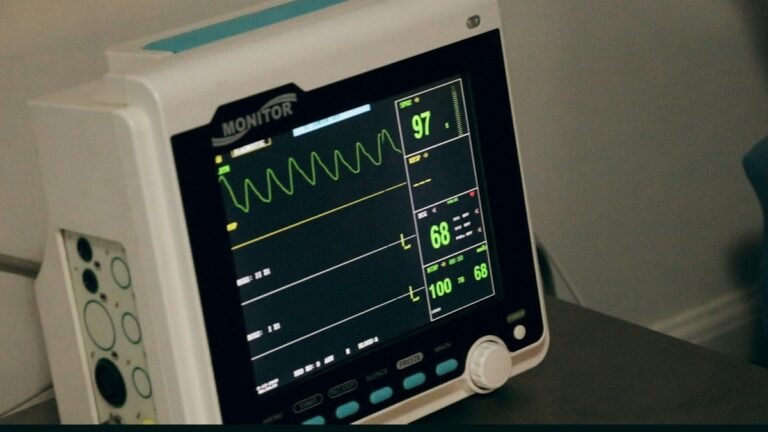
This domain covers rhythm recognition, 12 lead interpretation, resuscitation, post resuscitation care, and electrical therapies. NREMT states that 30% of this domain is allotted to graphical items with ECG rhythm strips, so reading strips accurately is a tested skill and not an optional extra.
Airway, Respiration and Ventilation (8% to 12%)
Expect oxygen delivery, advanced airway decisions, ventilation strategies, and interpreting what a patient’s breathing and monitoring data tell you. It is a modest share of the exam, so study it efficiently rather than at the expense of the larger domains.
EMS Operations (8% to 12%)
Operations covers the professional side of the job: vehicle and equipment operation, leadership and professionalism, communication and documentation, medical and legal standards, and the environment of care. This domain is weighted a little higher for Paramedics than for AEMTs, so do not treat it as filler.
Trauma (6% to 10%)
The smallest domain addresses assessment and management of injured patients, including bleeding control, chest and abdominal injuries, head and spinal injuries, burns, and shock. Its small weight does not mean you can skip it, since a missed trauma item counts the same as any other scored item.
A Sample Question
Here is an original practice item in the style of the trauma domain, written by us and not drawn from any NREMT material.
The Cognitive Exam and the Skills Question
Older study guides describe two parts: a cognitive exam and a separate psychomotor skills exam. That is out of date. As of October 2026, NREMT’s Paramedic certification is one examination, and its page states that no psychomotor examination is required. Hands on competency is now probed through the Clinical Judgment domain and scenario-based items. Items come in several types: multiple choice with four options, multiple response with two or three correct answers, build list, drag and drop, options box, and graphical items. All items are scored dichotomously, so partial answers earn no partial credit.
How to Study by the Weights
A simple rule is to give your study time roughly in proportion to the weights. Clinical Judgment plus Medical/Obstetrics/Gynecology together are 58% to 66% of the exam by range, so they deserve most of your sessions. Practice the six step reasoning cycle on mixed scenarios, not just on medication and protocol recall. Then add steady rhythm strip practice for Cardiology and Resuscitation, and use the smaller domains to close gaps. Timed practice also helps: at the 3.5 hour limit, you have roughly 84 to 115 seconds per question depending on how long the adaptive test runs.
Comparing levels? See EMT vs AEMT vs Paramedic. For the item types on the exam, read our guide to NREMT question formats.
Ready to see how these domains show up in practice? Start practicing with our NREMT Paramedic practice test, or try a free NREMT Paramedic practice test first to get a feel for the format.
Frequently Asked Questions
How many questions are on the NREMT Paramedic exam?
Between 110 and 150 questions, because the exam is a Computerized Adaptive Test and the length varies by candidate. Twenty of the questions are unscored pilot items that are not identified. The time limit is 3.5 hours.
What is the largest domain on the NREMT Paramedic exam?
Clinical Judgment, weighted at 34% to 38% of the exam. Medical/Obstetrics/Gynecology is second at 24% to 28%.
Is there still a psychomotor exam for Paramedics?
No. NREMT discontinued the Paramedic psychomotor exam, and the examinations starting July 1, 2024 require no psychomotor examination. Clinical Judgment content now lives inside the cognitive exam.
How much does the NREMT Paramedic exam cost?
As of October 2026, the Paramedic application fee is $175 per examination attempt. Retesting requires waiting 15 days from your last exam date and paying the fee again, and NREMT allows six chances to pass.
Sources
- nremt.org, National Registry Paramedic Examination Specifications
- nremt.org, AEMT and Paramedic Certification Examinations
- nremt.org, Paramedic Candidate Handbook: About the Examination
- nremt.org, Paramedic Candidate Handbook: Certification Process
Med Preps is not affiliated with, endorsed by, or sponsored by the National Registry of Emergency Medical Technicians (NREMT). NREMT is a registered trademark of the National Registry of Emergency Medical Technicians. All trademarks are the property of their respective owners.
For educational and exam preparation purposes only. Not a substitute for formal clinical training.