How Hard Is the NREMT Paramedic Exam? 82% Passed in 2025
The National Registry of Emergency Medical Technicians (NREMT) Paramedic Certification Examination had an 82% pass rate in 2025 according to NREMT’s Maps and Data page, with 23,483 candidates tested. The 2024 figure was 79% of 20,180 tested. As of October 2026, those are the most recent full years published at nremt.org. The exam is a Computerized Adaptive Test of 110 to 150 questions with a 3.5 hour limit, 20 of those questions are unscored pilot items, and the passing standard is the same for every candidate. Candidates who fail see a score on a 100 to 1500 scale with a passing point of 950, may retest after 15 days, and have six chances in total. So by NREMT’s own numbers, most candidates who sit the exam pass, which means roughly one in five do not on the attempts counted. The difficulty comes from format and breadth rather than from a low pass rate: a long adaptive test where the largest domain, Clinical Judgment, is 34% to 38% of the content.
What NREMT’s Published Pass Rate Shows
NREMT publishes annual figures on its Maps and Data page. For Paramedic, the “Percent Passing” figure was 82% in 2025 and 79% in 2024, both labeled as the certification examination. The 2023 figure, 79% with 19,163 candidates tested, was labeled the cognitive exam. The page does not define whether each figure counts only first attempts or includes retakers, so treat it as the share of tested candidates who passed in that year, not as a first attempt rate. It also changed its label between 2023 and 2024, which is a reminder that the exam itself changed on July 1, 2024. NREMT’s page for the new exam states the psychomotor exam is discontinued, so year over year comparisons across that line are imperfect.
Why Adaptive Testing Feels Harder Than the Number
A Computerized Adaptive Test does not give every candidate the same questions. After an initial set of items, the computer serves questions targeted at or above your estimated ability. NREMT states that the exam ends once the computer can make a pass or fail decision with 95% confidence at the minimum number of items, which is 110, and that otherwise it continues until the maximum number of items or the time limit is reached. The passing standard is identical for everyone, and there is no curve. For the item types you will see, read our guide to NREMT question formats.
The practical effect is psychological. If you answer correctly, the next question tends to be harder, so a strong candidate can feel challenged throughout. Finishing at 110 questions does not mean you failed, and running to 150 does not mean you passed. The length alone carries no verdict.
Time Pressure in Numbers
The 3.5 hour limit is 210 minutes. If your exam runs the full 150 questions, that works out to 84 seconds per question. If it ends at 110, you have about 115 seconds per question. Scenario-based items, ECG rhythm strips, and multiple response items take longer than a plain four option question, so pace matters more on this exam than on shorter certification tests. NREMT’s handbook also describes a non-disclosure agreement to complete within 5 minutes and a 10 minute tutorial, so plan the day around a long sitting.
Where the Content Difficulty Sits
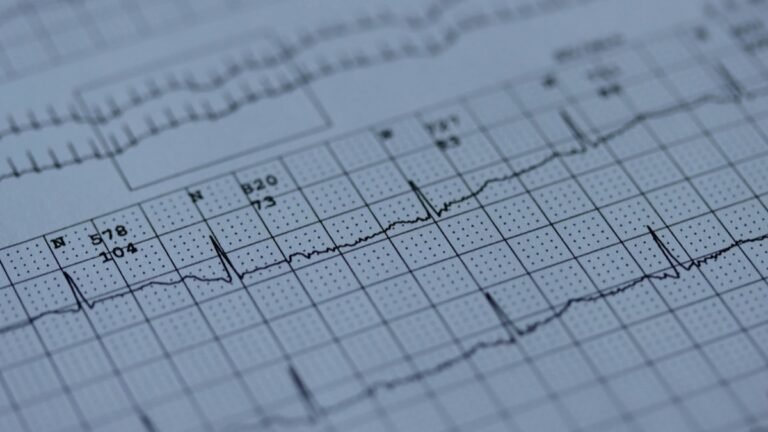
Clinical Judgment is 34% to 38% of the exam, more than a third of what you see. Together with Medical/Obstetrics/Gynecology at 24% to 28%, those two domains make up 58% to 66% of the content by range. These are reasoning-heavy domains. They reward understanding why you would act, not memorizing a list of actions. Item types add to this: besides single answer multiple choice, you may meet multiple response (two or three correct answers among five or six), build list, drag and drop, options box, and graphical items, with no partial credit on any of them. NREMT’s test plan notes that graphical items may include charts, ECG rhythm strips, images, and pictures, and that graphics may appear in any item type. For the full breakdown, see what is on the NREMT Paramedic exam.
What Failing Costs and What Retesting Looks Like
As of October 2026, the Paramedic application fee is $175 per attempt. NREMT’s handbook states you wait 15 days from your last examination date before testing again, reapply and pay once results post, and receive a new Authorization to Test. You have six chances to pass. Remedial training is required after three failed attempts, before you apply for the fourth. Results generally post to your National Registry account within three business days. These facts mean one bad test day is a setback, not an end point, but the fees and waiting periods do add up.
What Actually Prepares You
Because the standard is fixed and the exam is adaptive, preparation should match the structure: study in proportion to the domain weights, practice scenario-based reasoning rather than isolated recall, drill ECG rhythm strips, and rehearse long timed sessions so stamina is not the hidden difficulty. Practicing only on short untimed quizzes leaves the format itself as an avoidable source of difficulty.
Want to feel the format before test day? Start practicing with our NREMT Paramedic practice test, or try a free NREMT Paramedic practice test for a low pressure first look.
Frequently Asked Questions
What is the NREMT Paramedic exam pass rate?
NREMT’s Maps and Data page reports 82% passing for Paramedic in 2025 (23,483 tested) and 79% in 2024 (20,180 tested). The page does not say whether the figures are limited to first attempts.
How many questions and how much time do you get?
The adaptive exam runs 110 to 150 questions within a 3.5 hour limit. Twenty of the questions are unscored pilot items that you cannot identify.
How many times can you retake the NREMT Paramedic exam?
You have six chances to pass, with a 15 day wait after your last exam date. Remedial training is required after three failed attempts, before the fourth. Each attempt requires the $175 fee as of October 2026.
Is there still a Paramedic psychomotor exam?
No. NREMT discontinued it, and the Paramedic certification examination starting July 1, 2024 requires no psychomotor examination. Clinical Judgment content is tested inside the cognitive exam.
Sources
- nremt.org, Maps and Data: Nationally Certified EMS Clinicians and certification exam pass rates
- nremt.org, National Registry Paramedic Examination Specifications
- nremt.org, AEMT and Paramedic Certification Examinations
- nremt.org, Paramedic Candidate Handbook: About the Examination
- nremt.org, Paramedic Candidate Handbook: Certification Process
Med Preps is not affiliated with, endorsed by, or sponsored by the National Registry of Emergency Medical Technicians (NREMT). NREMT is a registered trademark of the National Registry of Emergency Medical Technicians. All trademarks are the property of their respective owners.
For educational and exam preparation purposes only. Not a substitute for formal clinical training.